EUROPEANMOBILITYWEEK News

News Search Result ( 111 - 115 from 194 )

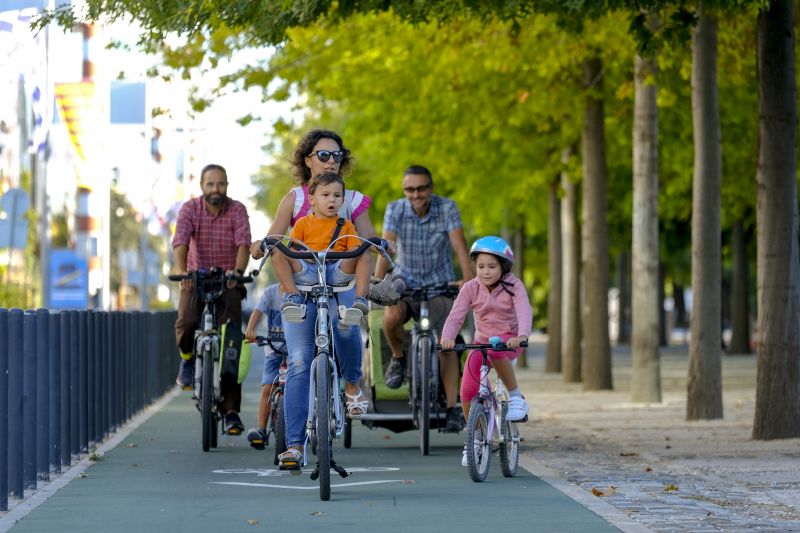
EUROPEAN MOBILITY WEEK 2019: promoting walking and cycling for better towns and cities

16 September 2019

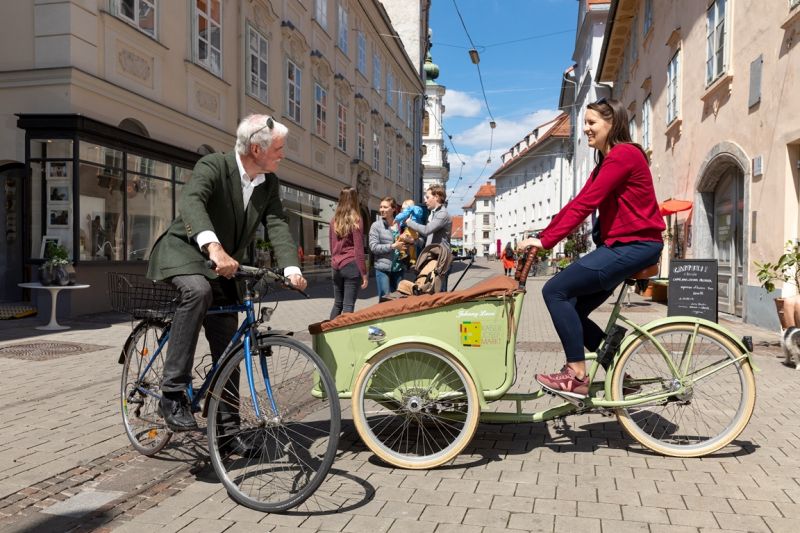
Today sees the start of the 18th edition of EUROPEANMOBILITYWEEK, the European Commission’s flagship campaign promoting clean and sustainable urban transport. Running from 16-22 September, almost 3,000 towns and cities from about 50 countries will join with their activities promoting safe walking and cycling with the call to action “Walk with us!”. EUROPEANMOBILITYWEEK culminates each year in the well-known Car-Free Day, when streets close for traffic and open for people!

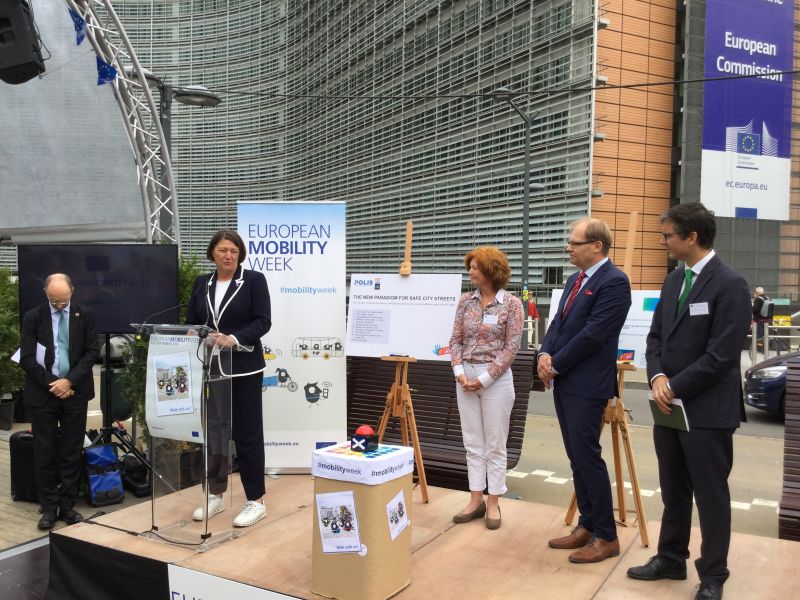
Speaking about EUROPEANMOBILITYWEEK 2019, EU Transport Commissioner Violeta Bulc said: “This year we would like to remind EU citizens that walking is enjoyable, healthy and completely free of charge. Many times it’s also a connecting mode for a smooth multimodal journey. The EU has invested a lot of effort to make it safe as well. So put on your walking shoes and walk with us!”

Karmenu Vella, EU Commissioner for Environment, Maritime Affairs and Fisheries, said: “When it comes to clean transport, walking is the most environmentally friendly way to move around our towns and cities. Local governments can do a lot to encourage walking in urban areas, pedestrianising streets, creating low-emission zones, and allocating more space to walkers. It’s great for your health, but walking also means doing your bit for your city’s air quality, one step at a time.”

Local authorities that make significant efforts to promote sustainable urban mobility during the campaign can apply for the EUROPEANMOBILITYWEEK Awards from 23 September until 23 October 2019. In 2018, the award for larger cities was presented to the Portuguese capital of Lisbon, while the German city of Lindau won in the category for towns and cities with less than 50,000 inhabitants.

Local authorities can also apply by 31 October 2019 for the SUMP Award, which is presented to local and regional authorities that have achieved excellence in sustainable urban mobility planning.

In addition, local authorities can also apply for the EU Urban Road Safety Award. The award, which was launched today, rewards local authorities for implementing innovative measures to improve road safety. The call for applications is open until 16 December 2019.

For more information, click here.
EUROPEAN MOBILITY WEEK Best Practice Guide 2019 released

11 September 2019

The 2019 edition of the EUROPEANMOBILITYWEEK Best Practice Guide features the outstanding achievements of the six local authorities that were selected as finalists for the 2018 EUROPEANMOBILITYWEEK Awards.

Lisbon (Portugal) the eventual winner of the EUROPEANMOBILITYWEEK Award for larger municipalities organised a number of activities during EUROPEANMOBILITYWEEK, including: museum bike trips, free bicycle repair workshops, and a special prize for people and organisations that promoted the use of bikes. These activities complemented the inauguration of 31 new bike-sharing stations, new and expanded bike lanes, and 800 new bike parking areas. The other finalists for the EUROPEANMOBILITYWEEK Award for larger municipalities were Gdynia (Poland) and Palma (Spain).

Lindau (Germany) the eventual winner of the EUROPEANMOBILITYWEEK Award for smaller municipalities organised: on-street info points to communicate the benefits of ‘mixing and moving’, a free hybrid shuttle bus and water taxi during Car-Free Day, and rewarded commuters who travelled by bike, foot, bus or train during the week with a free breakfast. Lindau also installed almost 500 new bike racks at train stations and bus stops, making it easier to cycle to and from public transport, and launched a new multimodal mobility app that enables users to plan a route using different transport modes. Karditsa (Greece) and Oliveira do Bairro (Portugal) were the runners up for the EUROPEANMOBILITYWEEK Award for smaller municipalities.

The guide also includes a number of inspiring MOBILITYACTIONs organised by NGOs, universities and private organisations, alongside good examples of activities carried out by municipalities both in and outside of Europe, and best practice by the National Coordination teams in a number of countries.

To download and read the Best Practice Guide, visit the Campaign Materials page.

CIVITAS Forum 2019 to explore interplay between new technologies and classic mobility solutions

2 September 2019

In 2003, the first ever CIVITAS Forum – Europe's leading sustainable mobility conference and the flagship event of the CIVITAS Initiative – took place in Graz (Austria). Today, Austria’s second city is vastly different to how it was 16 years ago. But, how and why have things changed during this time? What role has CIVITAS played in this? What must be done to ensure a continued transition towards sustainable, safe and connected mobility?

Under the banner “back to the future”, the CIVITAS Forum will return to Graz to answer these questions and examine the interplay between new technology and classic mobility solutions in the present day.

From 2-4 October, the Forum will bring together close to 500 city representatives, practitioners, policymakers and academics to debate and analyse the most pressing mobility topics. Participants will have the chance to examine the pioneering solutions bringing cleaner, better transport to Europe.

During the Forum, the second edition of the EU sustainable urban mobility planning guidelines will be launched, marking a major milestone for Europe’s transport community.

Due to overwhelming demand, capacity for the Forum has been reached. However, you can follow #CIVITAS2019 on Twitter and keep up with all the action through Facebook and LinkedIn.

For more information about the CIVITAS Forum 2019, click here.

Driving electric, autonomous, all-weather buses past the 'Finnish' line

9 August 2019

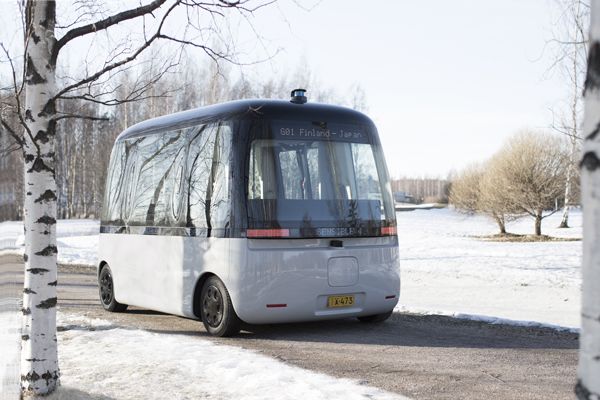
Earlier this year, ‘Gacha’ – the first autonomous, all-weather, electric bus – was unveiled in Helsinki (Finland), and has since been introduced in Espoo (Finland).

Gacha was developed in partnership between Finnish company Sensible 4, which provided the bus’ technology, and Muji, a Japanese company that worked on the design.

The autonomous bus is particularly unique in its ability to function in all weather conditions. This is especially crucial in a country like Finland that faces harsh winters. User experience was also carefully considered. Gacha can accommodate ten seated passengers, and six additional standing adults, and its interior aims to foster a “social environment.”

Marja-Liisa Niinikoski, CEO of Helsinki Business Hub, explains that Greater Helsinki has, “several urban testbeds enabling the creation of new smart mobility solutions and the city hosts the first open-mobility-as-a-service ecosystem in the world.” These are among the many ways that the city has invested in developing mobility innovations.

Throughout 2019, the bus will continue to be rolled out in other cities throughout Finland.

To learn more about Gacha, click here.

Practitioner guidance on sustainable urban mobility plans available in new languages

7 August 2019

Four key publications have now been released in French, Hungarian, Italian and Spanish. Mobility practitioners working in these languages can now make use of three manuals on selecting measures for a sustainable urban mobility plan (SUMP), and a report on developing a SUMP action plan.

In addition to providing assistance in identifying appropriate SUMP measures, the three manuals provide guidance on how to enhance select mobility fields. Each manual is tailored to a specific city profile, with beginner, intermediate and advanced SUMP cities covered. They also contain recommendations, rating systems for priorities of measures, and checklists for each city type.

The report gives guidance on how to go about approaching a crucial step in the SUMP process: the development of a SUMP action plan. It sets out responsibilities, resources, stakeholder coordination, time plans, and funding sources; breaks down action plan development into a six-step process (including an implementation plan); provides examples of action plan templates and best practice; and contains a user manual.

Read and download the documents in English, French, Hungarian, Italian and Spanish by clicking here.